It can be hard not to abandon hope for a sustainable future when you read about our rapidly growing global population and the hopes of those in the developing world (growing the fastest) to lead more 'western' lifestyles. For 'western', read 'consumptive'. Last year Jared Diamond came up with new numbers to make us feel even more hopeless; economically more developed countries are consuming resources and producing waste 32 times faster than less developed countries. That means, Diamond estimates, if everyone on earth were to eat as much meat, drive their cars as far and use electricity as prodigiously as Europeans, Americans and Japanese currently do it would be as if the human population had suddenly ballooned to 72 billion.
In an editorial in the latest issue of Conservation Biology, R. Edward Grumbine and Jianchu Xu use Diamond's example when discussing the rise of China as a global economic power and consumer and the potential implications for conservation, the environment and the climate debate:
"China's rapid economic rise has not helped conservation much. The country faces severe environmental challenges as the largest human population in history builds highways, factories, and housing to fully join the modern industrial world. The PRC [People's Republic of China], however, remains relatively poor. Per capita income in 2007 was a mere one-fifth of the U.S. average; a typical American teenager has more discretionary income than the total annual salary of the average Chinese citizen.
Despite the importance of biodiversity issues, we want to draw attention to less-discussed environmental concerns that involve China at regional and global scales and which will likely transform life for all of us over the rest of the 21st century."
Focusing on their discussion about issues related to climate change, Grumbine and Xu point out;
"Even if the European Union and the United States magically reduced their greenhouse gas emissions to zero while you are reading this sentence, China's current pace by itself may keep global emissions rising through 2020.
China should not be blamed for the world's runaway greenhouse gas emissions; the United States never even ratified the Kyoto Protocol. And we emphasize that China's development dream is not a vision exclusive to the PRC. Beyond the Middle Kingdom, there are at least 1.2 billion people desiring cars, a decent house attached to a sewer system, potable water, and a fair measure of education and health care."
The consequences of Chinese, and other poorer nations, realising their hopes of economic development?
"China and the rest of the less-developed world are driving wealthy countries toward a global reckoning with the fossil-fuel-powered, high-consumption, industrial way of life.
... The Tyndall Centre for Climate Change Research in the United Kingdom has estimated that some 23% of China's total emissions result from net exports to the developed world. The Earth's atmosphere bears a message: we are all in this together. China and climate change have collapsed us and them into we."
Grumbine and Xu reckon China is poised to assume a leadership role in solving our international environmental problems despite, or maybe as a consequence of, its rapidly growing population and ecological footprint. The US government also seems to now recognise that we're all in this together. In February, US Secretary of State Hillary Clinton set out to discuss these issues during her visit to China, and it appears her path may have been previously beaten (behind closed doors) during the preceding administration. In vowing to "restore science to its rightful place" President Obama named Nobel Prize laureate Steven Chu as his Energy Secretary. However, it seems that despite wanting to put science first, domestic political opposition to emissions cuts and to changes in the US energy mix are hindering these moves. Chu said recently to the BBC;
"As someone very concerned about climate I want to be as aggressive as possible but I also want to get started. And if we say we want something much more aggressive on the early timescales that would draw considerable opposition and that would delay the process for several years. ... But if I am going to say we need to do much, much better I am afraid the US won't get started."
However, Chu went on to discuss his aims for a "massive programme of efficiency for commercial buildings", vastly improved cost-effectiveness of solar energy, and an interconnected wind power grid. The Obama climate change bill is making progress, but the slow movement on energy policy because of domestic resistance to change has potential global consequences. If the economically more developed countries of the world cannot show that their populations are willing and able to change their lifestyles to be less consumptive, negotiations with developing countries will be hindered.
Pressure from lower levels of government will help push things along. Last week 178 Michigan scientists (including myself) signed a letter to the Michigan Congressional delegation calling for actions to achieve strong and effective federal climate change solutions policies. And scientists can (and need) to do more than just write letters and do their basic (physical) research in their laboratories and at their computers. Reiterating his commitment to science in an address to the National Academy of Science, President Obama asked scientists and academics to engage in society to inspire and enable people "to be makers of things, not just consumers of things".
A paper by David Pimentel and colleagues, entitled Energy efficiency and conservation for individual Americans, provides some solid numbers and ideas about how we as individual citizens in the economically more developed world can modify our residential energy use, reduce the impact of personal transport, and make informed decisions about what we eat. I've listed some of their more interesting suggestions for a sustainable lifestyle below. These are rational and effective ways we can change our lifestyles to live more sustainably and show that we are willing to share the responsibility of mitigating the human impact on the global environment. If we don't want to be left with mere hope for a sustainable future, we need to show how others in the world can realise their hopes of development whilst conserving energy, water and our other natural resources.
Residential Energy Conservation
Improve and upgrade windows - 25% of residential heating and cooling energy is lost directly through single pane windows
Plant trees - deciduous on south to shade the house in the summer and allow full-sun in the winter, evergreen trees to the north can act as a wind-break
Use the microwave - it's the most efficient way to steam, boil, and bake vegetables
Power-down your computer when it's not in use - "computers should be turned off if the unit will be left for 2 hours or more and if left for 30 min the machine should be set in standby mode"
Pimentel and colleagues suggest that implementing these, and other, measures around the home would save around 5,600 kWh/year, resulting in savings of about $390/year on home energy costs.
Personal Transport
Drive slower - "A reduction in speed from 104 kmph (65 mph) to 86 kmph (55 mph) will reduce fuel consumption 19% (UrbanPlanet). For a 104 km trip, only an additional 11 min would be required if one traveled at 86 kmph. This extra 11 min would repay the person nearly $1.86 in fuel saving, or repay the person $10/h."
Inflate your car tires properly - this will decrease the fuel consumption by up to 3%
Get rid of that junk in your trunk - "each 45 kg (100 pounds) of additional load in the car will reduce fuel mileage about 1%"
Ride your bike - bicycling uses 25 kcal/km (34 kcal/mile)compared with 938 kcal/km (1,510 kcal/mile) for a mid-sized car
In summary: "[c]urrently, the average American uses about 1,900 l (500 gallons) of fuel/year in personal transport in contrast to the average person in the United Kingdom who consumes 1,700 l (450 gallons) (Renner 2003). If Americans implement the suggestions listed above [and others I haven't listed] over a 10-year period, it would be possible to reduce fuel oil consumption between 10% and 20% from the current 20 quads of vehicle fuel [approximately 600 billion l or about 16 billion gallons of fuel] consumed in the U.S."
Food system The authors highlight several ways in which farmers and policy-makers can aggressively pursue sustainable agricultural practices. They are less precise about what individuals' can do but offer some general ideas:
Eat local products - reduces transport energy costs [and find out where you should buy your wine from here]
Eat less (especially less meat) - read more about meat and the environment here
"Select aluminum and steel packaging over glass or plastic, for energy conservation. For the same reasons, however, plastic and especially recyclable plastic should be selected instead of glass and/or paper."
Pimentel et al. summarise: "[w]ell-directed, serious conservation strategies influenced by individuals with supportive state and federal leadership and policies will have an enormous positive impact on transitioning to a sustainable energy future for the United States."
The second symposium I spent time in at US-IALE 2009, other than the CHANS workshop, was the Global Land Project Symposium on Agent-Based Modeling of Land Use Effects on Ecosystem Processes and Services. My notes for this symposium aren't quite as extensive as for the CHANS workshop (and I had leave the discussion part-way through to give another presentation) but below I outline the main questions and issues raised and addressed by the symposium (drawing largely on Gary Polhill's summary presentation).
The presentations highlighted the broad applicability of agent-based models (ABMs) across many places, landscapes and cultures using a diverse range of methodologies an populations. Locations and subjects of projects ranged from potential impacts of land use planning on the carbon balance in Michigan and rangeland management in the Greater Yellowstone Ecosystem, through impacts of land use change on wildfire regimes in Spain and water quality management in Australia, to conflicts between livestock and reforestation efforts in Thailand and the resilience of pastoral communities to drought Kenya. It was suggested that this diversity is a testament to the flexibility and power of the agent-based modelling approach. Methodologies used and explored by the projects in the symposium included:
model coupling
laboratory experiments (with humans and computers)
Applied questions that were raised by these projects included:
how do we get from interviews to agent-behaviours?
how well do our models work? (and how do we assess that?)
how sensitive is land use change to planning policies?
how (why) do we engage with stakeholders?
In our discussion following the presentation it was interesting to have some social scientists join in the discussion that was dominated by computer scientists and modellers. Most interestingly was the viewpoint of a social scientist (a political scientist I believe) who suggested that one reason social scientists may be skeptical of the power of ABMs is that social science inherently understands that 'some agents are more important than others' and that this is not often well reflected (or at least analysed) in recent agent-based modelling.
Possibly the most important question raised in discussion was 'what are we [as agent-based modellers] taking back to science more generally?' There were plenty of examples in the projects about issues that have wider scientific applicability; scale issues, the intricacies of (very) large scale simulation with millions of agents, the integration of social and ecological complexity, forest transition theory, edge effects in models, and the presence of provenance (path-dependencies) in model dynamics. Agent-based modellers clearly deal with many interesting problems encountered and investigated in other areas of science, but whether we are doing a good job at communicating our experiences of these issues to the wider scientific community is certainly something open to debate (and was in the symposium).
A related question, recently raised on the SIMSOC listserv (but not in the GLP sumposium) is 'what are ABMs taking back to policy-making and policy-makers'? Specifically, Scott Moss asked the question; 'Does anyone know of a correct, real-time, [agent] model-based, policy-impact forecast? His reasoning behind this question is as follows:
"In relation to policy, it is common for social scientists (including but not exclusively economists) to use some a priori reasoning (frequently driven by a theory) to propose specific policies or to evaluate the benefits of alternative policies. In either case, the presumption must be that the benefits or relative benefits of the specified policies can be forecast. I am not aware of any successful tests of this presumption and none of my colleagues at the meeting of UK agent-based modelling experts could point me to a successful test in the sense of a well documented correct forecast of any policy benefit.
The importance of the question: If there is no history or, more weakly, no systematic history of successful forecasts of policy impacts, then is the standard approach to theory-driven policy advice defensible? If so, on what grounds? If not, then is an alternative approach to policy analysis and an alternative role for policy modelling indicated?"
The two most interesting replies were from Alan Penn and Mike Batty. Penn suggested [my links added]:
"... the best description I have heard of 'policy' in the sense you are using was by Peter Allen who described it "at best policy is a perturbation on the fitness landscape". Making predictions of the outcome of any policy intervention therefore requires a detailed understanding of the shape of the mophogenetic landscape. Most often a perturbation will just nudge the system up a wall of the valley it is in, only for it to return back into the same valley and no significant lasting effect will be seen. On occasion a perturbation will nudge the trajectory over a pass into a neighbouring valley and some kind of change will result, but unless you have a proper understanding of the shape of this landscape you wont necessarily be able to say in advance what the new trajectory will be.
What this way of thinking about things implies is that what we need to understand is the shape of the fitness landscape. With that understanding we would be able to say how much of a nudge is needed (say the size of a tax incentive) to get over a pass. We would also know what direction the neighbouring 'valleys' might take the system, and this would allow predictions of the kind you want."
Batty:
"I was at the meeting where Scott raised this issue. Alan Wilson said that his company GMAP was built on developing spatial interaction models for predicting short term shifts in retailing activity which routinely produced predictions that were close to the mark. There are no better examples than the large retail units that routinely - every week - run their models to make predictions in retail markets and reportedly they produce good predictions. These are outfits like Tesco, Asda, M[orrisons] and S[ainsbury's] and so on. I cant give you chapter and verse of where these predictions have been verified and documented because I am an academic and dont have access to this sort of material. The kinds of models that I am referring to are essentially land use transport models which began in the 1960s and are still widely used today. Those people reading this post who arent familiar with these models because they are not agent based models can get a quick view by looking at my early book which is downloadable ...
I think that the problem with this debate is that it is focussed on academia and academics don't traditionally revisit their models to see if longer term predictions work out. In fact for the reasons Alan [Penn] says one would probably not expect them to work out as we cant know the future. However there is loads of evidence about how well some models such as the ones I have referred to can fit existing data - ie in terms of their calibration. My book and lots of other work with these models shows that can predict the baseline rather well. In fact too well and the problem has been that although they predict the baseline well, they can often be quite deficient at predicting short term change well and often this arises from their cross sectional static nature and a million other problems that have been raised over the last 30 or more years."
In response to Batty, Moss wrote:
"It is by no means unusual for model-based forecasts to be sufficiently accurate that the error is less than the value of the variable and perhaps much less. What systematically does not happen (and I know of no counterexample at all) is correct forecasting of volatile episodes such as big shifts in market shares in retail sales, macroeconomic recessions or recoveries, the onset of bear or bull phases in financial markets.
Policy initiatives are usually intended to change something from what has gone on before. Democratic governments -- executive and legislative branches -- typically investigate the reasons for choosing one policy rather than another or, at least, justify a proposed policy before implementation. Sometimes these justifications are based on forecasts of impacts derived from models. Certainly this is happening now in relation to the current recession. So the question is not whether there are ever correct forecasts. Certainly on the minimal criteria I suggested, there are many. The question is strictly about forecasts of policy impacts which, I conjecture, are rather like other major shifts in social trend and stability.
I believe this particular question is important because I don't understand the point of policy modelling if we cannot usefully inform policy formation. If the usefulness we claim is that we can evaluate policy impacts and, in point of fact, we systematically (or always) produce incorrect forecasts of the direction and/or timing of intended changes, then it seems hard to argue that this is a useful exercise."
But is focussing on the accuracy of forecasts of the future the only, or indeed best, way of using models to inform policy? In recent times some policy-makers (e.g. Tony Blair and New Labour) have come to see science (and it's tools of modelling and predictions) as some kind of a 'policy saviour', leading to what is known as evidence-based policy-making. In this framework, science sits upstream of policy-making providing evidence about the real state of the world that then trickles down to steer policy discourse. This may be fine when the science is solving puzzles, but there are many instances (climate change for instance) where science has not solved the problem and rather has merely demonstrated more clearly our ignorance and uncertainty about the material state of the world.
Science, generally, is about finding out about how the material world is. Policy, generally, is about deciding and making how the world how it ought to be. In many instances science can only provide an incomplete picture of how the world is, and even when it is confident about the material state of the world, there is only some much it can provide to an argument about how we think the world should be (which is what policy-making is all about). Emphasising the use of scientific models and modelling as a discussant, not a predictor, may be the best way to inform policy formulation.
In a paper submitted with one of my PhD advisors we discuss this sort of thing with reference to 'participatory science'. The GLP ABM symposium is planning on publishing a special issue of Land Use Science containing papers from the meeting - in the manuscript I will submit I plan to follow-up in more detail on some of these participatory and 'model as discussant' issues with reference to my own agent-based modelling.
A while ago I heard this interview with Peter Orszag, Director of the US Office of Management and Budget and one of President Obama's key economic advisors. Interestingly to me, given what I've written previously about quantitative models of human social and economic activity, Orszag is interested in Behavioural Economics and is somewhat skeptical about the power of mathematical models:
"Too many academic fields have tried to apply pure mathematical models to activities that involve human beings. And whenever that happens — whether it's in economics or health care or medical science — whenever human beings are involved, an approach that is attracted by that purity will lead you astray"
That's not to say he's not going to use some form of model forecasting to do his job. When Jon Stewart highlights (in his own amusingly honest way) the wide range of economic model projections out there for the US deficit, Orszag points out that he needs at least some semblance of a platform from which to anchor his management of the US economy. But it's reassuring for me to know that in managing the future this guy won't be seduced by quantitative predictions of it.
Last Friday I was aiming to go to a seminar by Dr Michael Nelson entitled An Unprecedented Challenge: Environmental Ethics and Global Climate Change. Unfortunately time flies when you're coding [our ecological-economic forest simulation model] and I missed it.
But I found a few bits and pieces on the MSU website that I assume are related. Like his recent article Abandon Hope in The Ecologist (written with John Vucetich), and this associated MSU interview in which he outlines his argument:
Even if they aren't quite what was discussed on Friday, it's still interesting stuff. Nelson's argument is that if the only reason we have to live sustainably is the hope that environmental disaster will be averted, it's unlikely that we'll actually avert those disasters. Why? Because hope is a pretty weak argument when confronted by a continual news stream about how unsustainable western societies are and because many messages suggest disaster is inevitable.
It seems much of this argument stems from Nelson's dissatisfaction with books like Jared Diamond's Collapse which spends the vast majority of 500 pages discussing the demise of previous societies and what could go wrong now, then finishing with a 5 page section entitled Reasons for Hope.
Cronon argued that global, 'prophetic' narratives are politically and socially inadequate because they don't offer the possibility of individual or group action to address global problems. Such 'big' issues are hard for individuals to feel like they can do anything about.
Part of Cronon's solution was the identification of 'smaller' (more focused) stories that individuals will be better able to empathise with. However, Cronon also played the hope card - suggesting that these more focused narratives offer individuals more hope than the global narratives.
Focusing on smaller issues closer to home may help - doesn't hope become a stronger argument when the problems faced are less complex and the solutions are seemingly closer at hand? But Nelson seems to be suggesting that (as any ardent sports fan will tell you) it's the hope that kills you.
"Instead of hope we need to provide young people with reasons to live sustainably that are rational and effective. We need to equate sustainable living, not so much with hope for a better future, but with basic virtues such as sharing and caring, which we already recognize as good in and of themselves, and not because of their measured consequences."
Nelson's is an ethical argument - that living sustainably should be portrayed as the 'the right thing to do', and that we should do it regardless of the consequences.
But then the question arises: how do we live sustainably? How do I know what the right thing to do is? Given a choice (on what printer paper to buy, for example) what decision to I make if I want to be sustainable? In order to make this choice we immediately need to start measuring the future consequences of our decisions. The future is an inherent part of the sustainability concept - it is about maintaining system processes or function into the future. So when we make our lifestyle decisions now, guided as they might be by the virtue of 'doing the right thing', we still need to have some idea about how we want the future to be, and which actions are more likely to get us there.
Nelson may be right - blind hope in a better future may prove counter productive given the current stream of global, prophetic, doomsaying narratives. But equally, just saying 'do the right thing' may be equally confusing for many people. Nelson isn't arguing that this is all we should do, of course - he also suggests there is a "desperate need for environmental educators, writers, journalists and other leaders to work these [virtuous] ideas into their efforts". It would be a good thing if living sustainably was more widely understood as 'doing the right thing'. But this virtue will remain largely irrelevant if we don't also work out how individuals and societies can live sustainably.
So what's the result of all this thinking? It seems we should be focusing less on on doomsaying prophetic narratives (boiling seas bleaching coral reefs on continents thousands of miles away, stories of global warming when there's a foot of snow outside, and so on) and more on what the individual person or group can do now, themselves, practically. In conjunction with the argument of acting virtuously with respect to sustainability, this focus may provide people with 'rational and effective' reasons, leaving them feeling more optimistic about the future and empowered to lead sustainable lives.
Update - 6th March Okay, how about a couple of quick examples to go with that rhetoric? The cover story of this month's National Geographic Magazine is a good one - Peter Miller looks at how we can start making energy savings (reducing CO2 emissions) around our own homes. And of course, I should have already pointed out the BBC's Ethical Man as he works out how to keep his environmental impact to a minimum. Currently he's attemting to traverse the USA without flying or driving. The ethics of Ethical Man are more implied than stated explicitly, but it's another example of the sort of reporting is discussed above - showing how individuals can act now rather than merely hoping for a better future.
Towards the end of last week the MSU Environmental Science and Public Policy Program held a networking event on Coupled Human and Natural Systems (CHANS). These monthly events provide opportunities for networking around different environmental issues and last week was the turn of the area CSIS focuses on. The meeting reminded me of a couple of things I thought I would point out here.
First is the continued commitment that the National Science Foundation (NSF) is making to funding CHANS research. The third week in November will be the annual deadline for research proposals, so watch out for (particularly) tired looking professors around that time of year.
Second, I realized I haven't highlighted on this blog one of the NSF CHANS projects currently underway at CSIS. CHANS-Net aims to develop an international network of research on CHANS to facilitate communication and collaboration among members of the CHANS research community. Central to the project is the establishment of an online meeting place for research collaboration. An early version of the website is currently in place but improvements are in the planning. I was asked for a few suggestions earlier this week and it made me realise how interested I am in the potential of the technologies that have arrived with web 2.0 (I suppose that interest is also clear right here in front of you on this blog). I hope to be able to continue to make suggestions and participate in the development of the site from afar (there's too much to be doing elsewhere to get my hands really dirty on that project). Currently, only Principle Investigators (PIs) and Co-PIs on NSF funded CHANS projects are members of the network, but hopefully opportunities for wider participation will be available in the future. In that event, I'll post again here.
On Friday I spoke at a workshop at MSU that examined a subject I'm not particularly well acquainted with. Participants in Pharmaceuticals in the Environment: Current Trends and Research Priorities convened to consider the natural, physical, social, and behavioral dimensions regarding the fate and impact of pharmaceutical products in the natural environment. The primary environmental focus of this issue is the presence of toxins in our water supply as a result of the disposal of human or veterinary medicines. I was particularly interested in what Dr. Shane Synder had to say about water issues facing Las Vegas, Nevada.
So what did I have to do with all this? Well the organisers wanted someone from our research group at the Center for Systems Integration and Sustainability to present some thoughts on how modelling of coupled human and natural systems might contribute to the study of this issue. The audience contained experts from a variety of disciplines (including toxicologists, chemists, sociologists, political scientists) and given my limited knowledge about the subject matter I decided I would keep my presentation rather broad in message and content. I drew on several of the topics I have discussed previously on this blog: the nature of coupled human-natural systems, reasons we might model, and potential risks we face when modelling CHANS.
In particular, I suggested that if prediction of a future system state is our goal we will be best served focusing our modelling efforts on the natural system and then using that model with scenarios of future human behaviour to examine the plausible range of states the natural system might take. Alternatively, if we view modelling as an exclusively heuristic tool we might better envisage the modeling process as a means to facilitate communication between disparate groups of experts or publics and explore what different conceptualisations allow and prevent from happening with regards our stewardship or management of the system. Importantly, in both cases the act of making our implicitly held models of how the world works explicit by laying down a formal model structure is the primary value of modelling CHANS.
There was brief talk towards the end of the meeting about setting up a workshop website that might even contain audio/video recordings of presentations and discussions that took place. If such a website appears I'll link to it here. In the meantime, the next meeting I'll be attending on campus is likely to be the overview of Coupled Human-Natural Systems discussion in the Networking for Environmental Researchers program.
Previously, I wrote about Orrin Pilkey and Linda Pilkey-Jarvis' book, Useless Arithmetic: Why Environmental Scientists Can’t Predict the Future. In a recent issue of the journal Futures, Jerome Ravetz reviews their book alongside David Waltner-Toews' The Chickens Fight Back: Pandemic Panics and Deadly Diseases That Jump From Animals to Humans. Ravetz himself points out that the subject matter and approaches of the books are rather different, but suggests that "Read together, they provide insights about what needs to be done for the creation of a genuine science of sustainability".
Ravetz (along with Silvio Funtowicz) has developed the idea of 'post-normal' science - a new approach to replace the reductionist, analytic worldview of ‘normal’ science. Post-normal science is a "systemic, synthetic and humanistic" approach, useful in cases where "facts are uncertain, values in dispute, stakes high and decisions urgent". I used some of these ideas to experiment with some alternative model assessment criteria for the socio-ecological simulation model I developed during my PhD studies. Ravetz's perspectives toward modelling, and science in general, shone through quite clearly in his review:
"On the philosophical side, the corruption of computer models can be understood as the consequence of a false metaphysics. Following on from the prophetic teachings of Galileo and Descartes, we have been taught to believe that Science is the sole and certain path to truth. And this Science is mathematical, using quantitative data and abstract reasonings. Such a science is not merely necessary for achieving genuine knowledge (an arguable position) but is also sufficient. We are all victims of the fantasy that once we have numerical data and mathematical argument (or computer programs), truth will inevitably follow. The evil consequences of this philosophy are quite familiar in neo-classical economics where partly true banalities about markets are dressed up in the language of the differential calculus to produce justifications for every sort of expropriation of the weak and vulnerable. ‘What you can’t count, doesn’t count’ sums it all up neatly. In the present case, the rule of models extends over nearly all the policy-relevant sciences, including those ostensibly devoted to the protection of the health of people and the environment.
We badly need an effective critical philosophy of mathematical science. ... Now science has replaced religion as the foundation of our established order, and in it mathematical science reigns supreme. Systematic philosophical criticism is hard to find. (The late Imre Lakatos did pioneering work in the criticism of the dogmatism of ‘modern’ abstract mathematics but did not focus on the obscurities at the foundations of mathematical thinking.) Up to now, mathematical freethinking is mainly confined to the craftsmen, with their jokes of the ‘Murphy's Law’ sort, best expressed in the acronym GIGO (Garbage In, Garbage Out). And where criticism is absent, corruption of all sorts, both deliberate and unaware, is bound to follow. Pseudo-mathematical reasonings about the unthinkable helped to bring us to the brink of nuclear annihilation a half-century ago. The GIGO sciences of computer models may well distract us now from a sane approach to coping with the many environmental problems we now face. The Pilkeys have done us a great service in providing cogent examples of the situation, and indicating some practical ways forward."
Thus, Ravetz finds a little more value in the Useless Arithmetic book than I did. But equally, he highlights that the Pilkeys offer few, rather vague, solutions and instead turns to Waltner-Toews' book for inspiration for the future:
Pilkey's analysis of the corruptions of misconceived reductionist science shows us the depth of the problem. Waltner-Toews’ narrative about ourselves in our natural context (not always benign!) indicates the way to a solution."
Using the outbreak of avian flu as an example of how to tackle complex environmental in the 'risk society' in which we now live, Waltner-Toews:
"... makes it very plain that we will never ‘conquer’ disease. Considering just a single sort of disease, the ‘zoonoses’ (deriving from animals), he becomes a raconteur of bio-social-cultural medicine ...
What everyone learned, or should have learned, from the avian flu episode is that disease is a very complex entity. Judging from TV adverts for antiseptics, we still believe that the natural state of things is to be germ-free, and all we need to do is to find the germs and kill them. In certain limiting cases, this is a useful approximation to the truth, as in the case of infections of hospitals. But even there complexity intrudes ... "
Complexity which demands an alternative perspective that moves beyond the next stage of 'normal' science to a post-normal science (to play on Kuhn's vocabulary of paradigm shifts):
"That old simple ‘kill the germ’ theory may now be derided by medical authorities as something for the uneducated public and their media. But the practice of environmental medicine has not caught up with these new insights.
The complexity of zoonoses reflects the character of our interaction with all those myriads of other species. ... the creatures putting us at risk are not always large enough to be fenced off and kept at a safe distance. ... We can do all sorts of things to control our interactions with them, but one thing is impossible: to stamp them out, or even to kill the bad ones and keep the good ones.
Waltner-Toews is quite clear about the message, and about the sort of science that will be required, not merely for coexisting with zoonoses but also for sustainable living in general. Playing the philological game, he reminds us that the ancient Indo-European world for earth, dgghem, gave us, along with ‘humus’, all of ‘human’, ‘humane’ and ‘humble’. As he says, community by community, there is a new global vision emerging whose beauty and complexity and mystery we can now explore thanks to all our scientific tools."
This global vision is a post-normal vision. It applies to far more than just avian flu - from coastal erosion and the disposal of toxic or radioactive waste (as the Pilekys discuss for example) to climate change. This post-normal vision focuses on uncertainty, value loading, and a plurality of legitimate perspectives that demands an "extended peer community" to evaluate the knowledge generated and decisions proposed.
In all fairness, it would not be easy to devise a conventional science-based curriculum in which Waltner-Toews' insights could be effectively conveyed. For his vision of zoonoses is one of complexity, intimacy and contingency. To grasp it, one needs to have imagination, breadth of vision and humility, not qualities fostered in standard academic training. ... "
This post-normal science won't be easy and won't be learned or fostered entirely within the esoteric confines of an ivory tower. Science, with its logical rigour, is important. It is still the best game in town. But the knowledge produced by 'normal' science is provisional and its march toward truth is seemingly Sisyphean when confronted faced with the immediacy of complex contemporary environmental problems. To contribute to the production a sustainable future, a genuine science of sustainability would do well to adopt a more post-normal stance toward its subject.
"The future is ours, not to predict, but to create."
- Al Gore, 16th June 2008
Hear, hear. Spoken in the context of climate change, this might be interpreted as a slight against Global Circulation Models used by scientists. Rather, I think this should be interpreted as an indication that Gore understands that we need to move past discussions about whether we can use such models to 'prove' whether climate change is actually happening, and instead act to mitigate against undesired change.
The theme of the meeting was the understanding of patterns, causes, and consequences of spatial heterogeneity for ecosystem function. The three keynote lectures were given by Gary Lovett, Kimberly With and John Foley. I found John Foley's lecture the most interesting and enjoyable of the three - he's a great speaker and spoke on a broader topic than the the others; Agriculture, Land Use and the Changing Biosphere. Real wide-ranging, global sustainability stuff. He highlighted the difficulties of studying agricultural landscapes because of the human cultural and institutional factors, but also stressed the importance of tackling these tricky issues because 'agriculture is the largest disturbance the biosphere has ever seen' and because of its large contribution to greenhouse gas emissions.
Presentations I was particularly interested in were mainly in the 'Landscape Patterns and Ecosystem Processes: The Role of Human Societies', 'Challenges in Modeling Forest Landscapes under Climate Change' and 'Cross-boundary Challenges to the Creation of Multifunctional Agricultural Landscapes' sessions.
In the 'human societies' session, Richard Aspinall discussed the importance of considering human decision-making at a range of scales and Dan Brown again highlighted the importance of human agency in spatial landscape process models. In particular, with regards modelling these systems using agent-based approaches he discussed the difficulty of model calibration at the agent level and stressed that work is still needed on the justification and evaluation phases of agent-based modelling.
The 'modeling forest landscapes' session was focused largely around use of the LANDIS and HARVEST models that were developed in and around Wisconsin. In fact, I don't think I saw any mention of the USFS FVS at the meeting whilst I was there, largely because (I think) FVS has large data demands and is not inherently spatial. LANDIS and HARVEST work at more coarse levels of forest representation (grid cell compared to FVS' individual tree) allowing them to be spatially explicit and to run over large time and space extents. We're confident we'll be able to use FVS in a spatially explicit manner for our study area though, capitalising on the ability of FVS to directly simulate specific timber harvest and economic scenarios.
The 'multifunctional agricultural landscapes' session had an interesting talk by Joan Nassauer on stakeholder science and the challenges it presents. Specific issues she highlighted were: 1. the need for a precise, operational definition of 'stakeholder' 2. ambiguous goals for the use of stakeholders 3. the lack of a canon of replicable methods 4. ambivalence toward the quantification of stakeholder results
Other interesting presentations were given by Richards Hobbs and Carys Swanwick. Richard spoke about the difficulties of 'integrated research' and the importance of science and policy in natural resource management. He suggested that policy-makers 'don't get' systems thinking or modelling, and that some of this may be down to the psychological profiles of the types of people that go into policy making. Such a conclusion suggests scientists need to work harder to bridge the gap to policy makers and do a better job of explaining the emergent properties of the complex systems they study. Carys Swanwick talked about the landscape character assessment, which was interesting for me having moved from the UK to the US about a year ago. Whilst 'wilderness' is an almost alien concept in the UK (and Europe as a whole), landscape character is something that is distinctly absent in the new world agricultural landscapes. Carys talked about the use of landscape character as a tool for conservation and management (in Europe) and the European Landscape Convention. It was a refreshing change from many of the other presentations about agricultural landscape (possibly just because I enjoyed seeing a few pictures of Blighty!).
Unfortunately the weather during the conference was wet which meant that I didn't get out to see as much of Madison as I would have liked. Despite the rain we did go on the Biking Fieldtrip. And yes, we did get soaked. It was also pretty miserable weather for the other fieldtrip to and International Crane Foundation center and the Aldo Leopold Foundation (more on that in a future blog), but interesting nevertheless.
Other highlights of the conference for me were meeting the former members of CSIS and eating dinner one night with Monica Turner. I also got to meet up with Don McKenzie and some of the other 'fire guys', and a couple of people from the Great Basin Landscape Ecology lab where I visited previously. And now I'm already looking forward to the meeting next year in Snowbird, Utah (where I enjoyed the snow this winter).
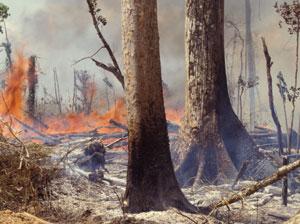
This week's edition of Nature devotes an editorial, a special report and an interview to the subject of tropical rainforests and their deforestation. The articles highlight both the proximate causes and underlying driving forces of tropical deforestation, and the importance of human activity as an agent of change (via fire for example), in these socio-ecological systems.
The editorial considers the economics of rainforest destruction, with regards to global carbon emissions. It suggests that deforestation must be integrated into international carbon markets, to reward those countries that have been able to control the removal of forest land (such as India and Costa Rica). Appropriate accounting of tropical rainforest carbon budgets is required however, and the authors point to the importance of carbon budget modelling and the monitoring of (via satellite imagery for example) change in rainforest areas over large spatial extents. Putting an economic price on 'ecosystem services' is key to this issue, and the editorial concludes:
One of the oddly positive effects of global warming is that it has given the world the opportunity to build a more comprehensive and inclusive economic model by forcing all of us to grapple with our impact on the natural environment. We are entering a phase in which new ideas can be developed, tested, refined and rejected as necessary. If we find just one that can beat the conventional economic measure of gross domestic product, and can quantify some of the basic services provided by rainforests and other natural ecosystems, it will more than pay for itself.
The special report focuses on the efforts of the Brazilian government to curb the rate of deforestation in the their Amazonian forests. The Brazilian police force is blockading roads, conducting aerial surveys and inspecting agricultural and logging operations, to monitor human activities on the ground. Brazilian scientists meanwhile are monitoring the situation from space, and have developed methodologies and techniques that are leading the way globally in the remote monitoring of forests. The Brazilian government is a keen advocate of the sort of economic approaches to the issues of rainforest destruction highlighted in the editorial outlined above, and sees this rigorous monitoring as key to be able to show how much carbon they can save by preventing deforestation.
Halting the removal of forest cannot simply be left to carbon trading alone, however, and local initiatives need to be pursued. To ensure the forest's existence is sustainable, local communities need to be able make money for themselves without chopping down the trees - if they can do this it will be their in their interests NOT to remove forest. But developing this incentive has not been straightforward. For example, some researchers have have suggested that as commodity prices for crops such as soya beans have increased (possibly due to increased demand for corn-based ethanol in the US) deforestation has increased as a result. Although the price of soya beans may be a contributing factor to rainforest removal, Ruth DeFries (who will be visiting CSIS and MSU next week as part of the Rachel Carson Distinguished Lecture Series) suggests that it is not the main driver. Morton et al. found that during for the period 2001-04, conversion of forest to agriculture peaked in 2003. This situation makes it clear that there are both proximate causes and underlying driving forces of tropical deforestation. The Nature special report suggests:
If the international community is serious about tackling deforestation, it will probably need to use a hybrid approach: helping national governments such as Brazil to fund traditional policies for enforcement and monitoring and enabling communities to experiment with a market-based approach.
But how long do policy-makers have to discuss this and get these measures in place? One set of research suggests 55% of the Amazon rainforest could be removed over the next two decades, and the complexity of the rainforest system means that a 'tipping point' (i.e., an abrupt transition) beyond which the system might not recover (i.e., reforestation would not be possible). The Nature interview with Carlos Nobre highlights this issue - the interactions of climate change with soil moisture and the potential for fire indicate that the there is risk of rapid 'savannization' in the eastern to southeastern Amazon as the regional climate changes. When asked what the next big question scientists need to address in the Amazon is, Nobre replies that the role of human-caused fire will be key:
Fire is such a radical transformation in a tropical forest ecosystem that biodiversity loss is accelerated tremendously — by orders of magnitude. If you just do selective logging and let the area recover naturally, perhaps in 20–30 years only a botanist will be able to tell that a forest has been logged. If you have a sequence of vegetation fires going through that area, forget it. It won’t recover any more.
As I've previously discussed, considering the feedbacks and interactions between systems is important when examining landscape vulnerabilities to fire. Along with colleagues I have examined the potential effects of changing human activity on wildfire regimes in Spain (recently we had this paper published in Ecosystems and you can see more wildfire work here). However, the integrated study of socio-economic and ecological systems is still very much in its infancy. And the processes of landscape change in the northern Mediterranean Basin and the Amazonian rainforest are very different; practically inverse (increases in forest in the former and decreases in the latter). As always, plenty more work needs to be done on these subjects, and with the potential presence of 'tipping points', now is an important time to be doing it.
I've been watching Ewan McGregor and Charlie Boorman on their epic motorcycle adventure all the Long Way Down from John O'Groats in Scotland through Europe and Africa to Cape Town, South Africa. It's like a 21st century lads version of Michael Palin's jolly jaunts around the world and follows on from their last trip from London to New York the (wrong) Long Way Round. Another inspirational set of characters to give one itchy feet...
One of the charities they're associated with and raising money for on their trip is UNICEF. On their way through Africa the boys visited places where UNICEF are working, like in Ethiopia where they are still clearing land mines from previous wars and educating local children and families about the dangers that remain.
You can support this work by sponsoring a mile of Ewan and Charlie's route. All of the money raised supports the UNICEF Long Way Down Fund to help children affected by conflict, poverty and HIV/AIDS in Africa. For example, £1 will buy six sachets of peanut butter paste that is used to treat children with malnutrition. Checkout the map - I've sponsored mile 114.
What does it mean to 'be' an expert? at RGS-IBG 2008
That man James Porter is busy at the Geography conferences these days. Alongside organising a session at the 2008 AAG on Private Science & Environmental Governance, he's also organising a session at the 2008 RGS-IBG Annual Meeting on expertise and what it means to be an expert. Details below, abstract submissions are due by 16th January 2008.
I didn't make it to the meeting last year but hope to in 2008...
Call for Papers: (Re)Thinking Expertise: Spaces of Production, Performance and the Politics of Representation RGS-IBG, Annual Meeting, 27 - 29 August 2008 London
What does it mean to 'be' an expert? Although social constructionism has identified similarities between science and other social practices, recently a controversial call for a “Third Wave” of science studies (Collins & Evans, 2002) has drawn attention to the problem of Extension – the infinite regress encountered when looking for techno-scientific advice if we can no-longer tell the difference between expert and lay-knowledge. Expertise has previously been understood to be the unyielding pursuit of authoritative knowledge that is honed through practice and enforced by political and academic institutions. In this sense, the professional identities presented to the outside world are carefully crafted so as to conform and exhibit ideological norms not dissimilar to Merton’s ideals. Such readings, however, arguably present an overly romantic, simplistic, and homogenous rendering of experts and their expertise. What is needed is examination of how experts’ identities are constructed (when and by whom), how they are negotiated between actors and institutions, the historical context in which they are played out, and ultimately how they function (or don’t) instrumentally to serve or suppress certain realities.
Expertise is arguably played out more visibly today than ever before, particularly with reference to the environment. Floods, hurricanes, infectious animal diseases, and a myriad of other concerns are captured graphically and broadcasted nightly into homes across the world. Each event and the subsequent response depicts the experts involved as either heroes or villains of these dramatised pieces – in both cases thrust into the limelight as representatives of their respective fields. Geographers are uniquely positioned to comment on this. They can provide theoretical depth and empirical evidence to shed light on the way expert identities are shaped, the role they serve, the impact on the democratization of knowledge, and the barriers they present to tackling environmental problems. We therefore invite papers addressing (though not limited to) the following questions:
Who constructs the image of environmental experts? How / where are these constructions enacted (i.e. technological, sociocultural, artefacts, etc.)?
Can representations be negotiated? If so, what role have academics played in shaping past perceptions and might hope to play in the future? What agency do these representations have?
What is the effect of these representations? Do they ever coincide or clash with the needs, understandings and views of actors (public, political, etc.)? Where are they successful and unsuccessful?
Do the representations come to in turn alter the landscape and shape an environment which conforms to the possible misguided representation itself? Does this lead to a snowballing of representations and hence crisis where ‘reality’ breaks?
Abstracts should be sent to James Porter (james.porter at kcl.ac.uk) and Joseph Hillier (joseph.hillier at ucl.ac.uk) by 16th January 2008.
Engaging the Future: Forecasts, Scenarios, Plans, and Projects (2007) edited by Hopkins, L.D. and Zapata, M.A.
The future is inherently uncertain. In accepting this we should not be fatalistic suggest the authors of Engaging the Future. Rather, as the title of the book suggests, scholars, planners, public officials, and citizens alike should endeavour to engage the future, creating and shaping it via a continuing process of regional and urban planning. The tools available for us to advance this process are forecasts, scenarios, plans, and projects.
The opening chapter by the editors Hopkins and Zapata sets the tone for the volume, highlighting that these tools are ways of representing, manipulating, and assessing ideas about the future. They allow us not simply to think about the future but also to influence it. Predictions, however, are conspicuous by their absence from Hopkins and Zapata's putative toolbox. This, as Moore discusses in chapter 2, is because of an all too frequent over-reliance on quantitative output from models. Moore complains that the emphasis on using numerical predictions about populations, transport demands, and other regional trends can inhibit creativity, stifle debate, and limit policy alternatives, when predicted futures are regarded as inevitable ones. Thus, numerical predictions can suppress uncertainty rather than engaging and dealing with it effectively.
The alternative approach, developed and explored throughout the remaining chapters, is one that is increasingly reflexive, collaborative, democratic, and consensual. Both the tools that will facilitate this approach and their use in (predominantly American) case studies are presented and discussed. In chapter 3 Grant discusses the use of visioning to improve participation in the planning process, highlighting both the advantages (democratic inclusion) and drawbacks (potential munipulation) of such an approach. Myers (chapter 4) introduces the idea of narratives to examine how individual choices will influence future communities, and stresses that, if quantitative data about the future are to be used, they must be embedded within a story that describes community transformations through time. Narratives are also discussed as tools by which to engage and generate 'reflective conversations' between diverse parts of the public (Cummings, chapter 12) and to highlight multiple views and expectations about the future rather than suppressing them (Zapata, chapter 13).
Chapters 5 (Smith), 6 (Avin), 7 (Harwood), and 11 (Deal and Pallathucheril) all focus on the use of scenarios in planning in business, industrial, regional, and local community contexts. In these contexts, scenarios differ from forecasts as they do not assign any probability or likelihood estimates to their feasibility, and so better able to explore nonstationary processes and their normative implications. By generating scenarios using the input from local stakeholders these authors suggest community concerns, perceptions, and values can be integrated into a formal description of possible futures, helping to build the capacity of a community to plan via education, dialogue, and empowerment.
Isserman, Klosterman, and Hopkins (chapters 9, 10, and 14, respectively) continue the emphasis on the continued need for a shift away from a 'technocratic, mystified' approach toward an 'open, participatory' one. Such a philosophy is consistent with the attitude of the need to 'democratise science' that has been forwarded recently in the United Kingdom, particularly by organisations such as the think tank DEMOS. Echoing those debates about experts and the politics of expertise, Klosterman argues that, despite their technical skills, planners cannot claim any special knowledge about the desirability of given futures, or arguably even their probability of occurring, than ordinary citizens with their lived 'experience expertise' about the changing nature of the region. In turn, Hopkins suggests plans should become `living documents' that are negotiated and support continued deliberation by multiple
This broad message of the book - to accept uncertainty and embrace participatory approaches - resonates with contemporary attitudes across other areas of environmental science and management. Adaptive resource management, for example, is a process of 'learning by experimenting', updating policies and management strategies as more is learnt about the system in hand. Likewise, Funtowicz and Ravetz (1993) have argued that a new form of `postnormal' science that embraces uncertainty, individuals' personal values, and dialogue amongst multiple stakeholders is required to solve the environmental problems arising from applications of 'normal', reductionist science.
However, uncertainty is politically undesirable and participation is not a panacea. Accepting uncertainty is disquieting - embracing it is even more of a challenge. Policy makers are often loathe to accept advice based on uncertainty, and where uncertainty is accepted it is often used to delay (tough) decision making. A pertinent example is political unwillingness to address the suggested causes of potential anthropogenic climate change in certain quarters because of the scientific uncertainty in those processes. Participatory approaches demand both the will and the skill to engage with non-planners. Making the planning process more inclusive is likely to slow it, potentially leading to unforeseen (and unwanted) demands on the planning process and remit. Participatory approaches will demand that planners expand their skill set to learn how to incorporate a variety of perspectives and views into their planning process.
The case studies presented in each chapter show how this might be done, offering practical ways to engage this multiplicity of demands and perspectives. In this light, Engaging the Future will be most useful for, or have most impact upon, students and junior planners. Given the emphasis of the book on wider participation in the planning process it should be read by more than just planners and students however. Well-produced with uncomplicated language, useful figures, and a glossary of planning terms, this book will be accessible and valuable both to the policy makers calling upon the services of planners and to the citizens and stakeholders who will be influenced by the outcomes of their actions.
Private Science & Environmental Governance at the AAG
James Porter, a friend of mine from Geography at King's College London, is co-convening a session at the 2008 Association of American Geographers Annual Meeting to address the issue of the increasing contribution of 'private science' to environmental decision-making and knowledge about the world around us. Sounds like it will be an interesting session - if I actually make it to the AAG next year I'll have to swing by.
Submissions for the session are open until October 21st 2007. Abstracts and PIN numbers (obtained by registering your abstract online) should be sent to James Porter (james.porter at kcl.ac.uk) and Leigh Johnson (leighjohnson at berkeley.edu) Conference information here. Submit your abstract and get your PIN here.
Here's the session details and call for papers in full:
Private Science, Environmental Governance & the Management of Knowledge Association of American Geographers Annual Meeting, April 15-19, 2008 Boston, MA
In the US and UK, new forms of market-based, commercially driven, and politically relevant demands are restructuring the context of scientific research and the social norms and values therein. No longer can academic institutions expect the same levels of public support immortalized by Vannevar Bush; in recent decades we have seen the rapid ascent of private science or science for hire to fill the void. Science is now routinely contracted-out to the private sector to produce a range of products from Climate Forecast Predictions, flood modeling outputs, risk assessments, chemical tests, life-style drugs and myriad other products that find their way into public policy and regulatory decision-making. The appeal of this new form of scientific research is its cost-effectiveness, its embrace of strategic ignorance, and its flexibility in allowing clients to guide the design and outcome of the work produced.
Yet, environmental governance is shaped extensively by the use of scientific knowledge. In the context of governing citizens, regulating private enterprise, and guiding development, what happens when nature and science are conceptualized in terms of their commercial potential? Geographers are uniquely positioned to provide theoretical depth and empirical evidence to answer these questions. We seek papers addressing (though not limited to) the following questions:
How are commercial science, modeling, and assessments done in practice? What is lost and equally gained in this process? What is ignored in these new knowledge productions?
These questions open up room to consider the contested practice of translation: who chooses what is to be translated? Who does the translation? Does the quality of translation impact the nature of knowledge, and if so, how? How might unlikely allies become enrolled in the project?
Can we discern a particular set of preferred methodologies or instruments that are consistently deployed in the performance of private science? Are these characteristic of a particular neoliberal mode of governance?
If private science has come to dominate fact-making about nature, does this entail a transformation from the rule of (bureaucratic) experts? How do these new forms of knowledge gain authoritative status, if at all?
What are the implications for the subjects of governance?
"I think fundamentally societies have to make choices as to whether they want more material well being or more tranquillity. Regrettably I think we cannot have both. ... That's what I believe the evidence very conclusively indicates."
"All you can basically know is whether probabilities are increasing or decreasing. We have no capability of looking into to the future and knowing for certain that certain things are going to happen."
In the latest issue of Landscape Ecology, Louis Iverson suggests landscape ecologists have a role in poverty relief. Reviewing Sachs' The End of Poverty: Economic Possibilities for our Time, Iverson believes the book 'should motivate additional research and implementation of principles within landscape ecology into this critical arena' and argues that landscape ecologists'can provide expertise to efficiently use funds to the greatest value and to research sustainable, integrated pathways to development'. After discussing several aspects of the current state of the global poverty problem (poverty statistics, water scarcity, Millennium Development Goals, environmental constraints on development), Iverson suggests landscape ecologists can contribute to these issues by;
Modelling the impacts and possible mitigation of climate change on water and agricultural production, especially in the most vulnerable zones with high levels of extreme poverty
Creating innovative, landscape-level systems for efficient water use, agricultural production, and infrastructure in the zones of extreme poverty
Working towards sustainable management of ecosystems, especially fragile ecosystems, that are deteriorating due to human pressures
Assisting in planning for urban growth that also sustains agriculture productivity using appropriate water, soil, and food management systems
Building models of low-cost but sustainable means of protection against natural or technological disasters, especially storms, floods, and droughts (climate-related disasters)
Designing infrastructure and energy improvements in developing countries with maximum positive human impact and minimum negative environmental impact
Working to better understand the diseases of the poor and spatial and temporal relationships of these diseases
Working to understand how over-consumption and excessive wealth contributes to environmental degradation and poverty elsewhere in the global landscape, and propose/model remedial solutions
Developing partnerships with ecologists, economists, landscape architects, wildlife managers, and land managers in developing countries that make a difference
Seeking out students from poor countries who can provide direct linkages to projects back in their home countries
Assisting in land-use and urban planning efforts where practical and feasible, focusing on improving conditions for slum dwellers
Working to help influence decision-makers to realize that investments toward the goals outlined above are well spent and the right thing to do
More inspiration, if it were needed, to continue this field of research...
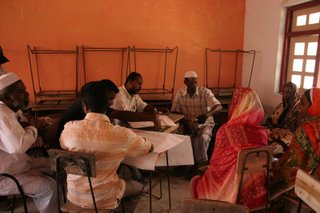
Erin (AKA travelorphan) has been offline for a while, but on her return from the field she's made several posts to her blog detailing some of her recent work and the events in Sri Lanka.
The Economist today highlighted some recent work by Dr Thomas Elmqvist of Stockholm University. Using a combination of Landsat satellite imagery and interviews and surveys with locals in Madagascar, they examined whether human population densities or land tenure systems were more important for determining patters of tropical deforestation.
"From the Landsat images they were able to distinguish areas of forest loss, forest gain and stable cover. Different parts of Androy exhibited different patterns. The west showed a continuous loss. The north showed continuous increase. The centre and the south appeared stable. Damagingly for the population-density theory, the western part of the region, the one area of serious deforestation, had a low population density.
This is not to say that a thin population is bad for forests; the north, where forest cover is increasing, is also sparsely populated. But what is clear is that lots of people do not necessarily harm the forest, since cover was stable in the most highly populated area, the south.
The difference between the two sparsely populated regions was that in the west, where forest cover has dwindled, neither formal nor customary tenure was enforced. In the north—only about 20km away—land rights were well defined and forest cover increased. As with ocean fisheries, so with tropical forests, everybody’s business is nobody’s business."
Can we predict the future? Orrin Pilkey and Linda Pilkey-Jarvis say we can't. They blame the complexity of the real world alongside a political preference to rely on the predictive results of models. I'm largely in agreement with them on many of their points but their popular science book doesn't do an adequate job of explaining why.
The book is introduced with an example of the failure of mathematical models to predict the collapse of the Grand Banks cod fisheries. The second chapter tries to lay the basis of their argument, providing an outline of underlying philosophy and approaches of environmental modelling. This is then followed by six case studies of the difficulties of using models and modelling in the real world: the Yucca Mountain nuclear waste depository, climate change and sea-level rise, beach erosion, open-cast pit mining, and invasive plant species. Their conclusion is entitled 'A Promise Unfulfilled' - those promises having been made by engineers attempting to apply methods developed in simple, closed systems to those of complex, open systems.
Unfortunately the authors don't describe this conclusion in such terms. The main problems here are the authors' rather vague distinction between quantitative and qualitative models and their inadequate examination of 'complexity'. In the authors' own words;
"The distinction between quantitative and qualitative models is a critical one. The principle message in this volume is that quantitative models predicting the outcome of natural processes on the surface of the earth don't work. On the other hand, qualitative models, when applied correctly, can be valuable tools for understanding these processes." p.24
This sounds fine, but it's hard to discern, from their descriptions, exactly what the difference between quantitative and qualitative models is. In their words again,
Quantitative Models:
"are predictive models that answer the questions 'where', 'when', 'how much'"
p.24
"if the answer [a model provides] is a single number the model is quantitative"
p.25
Qualitative Models:
"predict directions and magnitudes"
p.24
do not provide a single number but consider relative measures, e.g "the temperature will continue to increase over the next century" p.24
So they both predict, just one produces absolute values and the other relative values. Essentially what the authors are saying is that both types of models predict and both produce some form of quantitative output - just one tries to be more accurate than another. That's a pretty subtle difference.
Further on they try to clarify the definition of a qualitative model by appealing to concepts;
"a conceptual model is a qualitative one in which the description or prediction can be expressed as written or spoken word or by technical drawings or even cartoons. The model provides an explanation for how something works - the rules behind some process" p.27.
But all environmental models considering process (i.e. that are not empirical/statistical) are conceptual, regardless of whether they produce absolute or relative answers! Whether the model is Arrhenius' back of the envelope model of how the greenhouse effect works, or a Global Circulation Model (GCM) running on a Cray Supercomputer and considering multiple variables, they are both built on conceptual foundations. We could write down the structure of the GCM, it would just take a long time. So again, their distinction between quantitative and qualitative models doesn't really make things much clearer.
With this sandy foundation the authors examine suggest that the problem is that the real world is just too complex for the quantitative models to be able to predict anything. So what is this 'complexity'? According to Pilkey and Pilkey-Jarvis;
"Interactions among the numerous components of a complex system occur in unpredictable and unexpected sequences." p.32
So, models can't predict complex systems because they're unpredictable. hmm... A tautology no? The next sentence;
"In a complex natural process, the various parameters that run it may kick in at various times, intensities, and directions, or they may operate for various time spans".
Okay, now were getting somewhere - a complex system is one that has many components in which the system processes might change in time. But that's it, that's our lot. That's what complexity is. That's why environmental scientists can't predict the future using quantitative models - because there are too many components or parameters that may change at any time to keep track of such that we couls calculate an absolute numerical result. A relative result maybe, but not an absolute value. I don't think this analysis quite lives up to it's billing as a sub-title. Sure, the case-studies are good, informative and interesting but I think this conceptual foundation is pretty loose.
I think the authors' would have been better off making more use of Naomi Oreskes' work (which they themselves cite) by talking about the difference between logical and temporal prediction, and the associated difference between 'open' and 'closed' systems. Briefly, closed systems are those in which the intrinsic and extrinsic conditions remain constant - the structure of the system, the processes operating it, and the context within which the system sits do no change. Thus the system - and predictions about it - are outside history and geography. Think gas particles bouncing around in a sealed box. If we know the volume of the box and the pressure of the gas, assuming nothing else changes we can predict the temperature.
Contrast this with an 'open' system in which the intrinsic and extrinsic conditions are open to change. Here, the structure of the system and the processes operating the system might change as a result of the influence of processes or events outside the system of study. In turn, where the system is situated in time and space becomes important (i.e. these are geohistorical systems), and prediction becomes temporal in nature. All environmental systems are open. Think the global atmosphere. What do we need to know in order to predict the temperature in the future in this particular atmosphere? Many processes and events influencing this particular system (the atmosphere) are clearly not constant and are open to change.
As such, I am in general agreement with Pilkey and Pilkey-Jarvis' message, but I don't think they do the sub-title of their book justice. They show plenty of cases in where quantitative predictive models of environmental and earth systems haven't worked, and highlight many of the political reasons why this approach has been taken, but they don't quite get to the guts of why environmental models will never be able to accurately make predictions about specific places at specific times in the future. The book Prediction: Science, Decisions Making, and the Future of Nature provides a much more comprehensive consideration of these issues and, if you can get your hands on it, is much better.
I guess that's the point though isn't it - this is a popular science book that is widely available. So I shouldn't moan too much about this book as I think it's important that non-modellers be aware of the deficiencies of environmental models and modelling and how they are used to make decisions about, and manage, environmental systems. These include:
the inherent unpredictability of 'open' systems (regardless of their complexity)
the over-emphasis of environmental models' predictive capabilities and expectations (as a result of positivist philosophies of science that have been successful in 'closed' and controlled conditions)
the politics of modelling and management
the need to publish (or at least make available) model source code and conceptual structure
an emphasis on models to understand rather than predict environmental systems
any conclusions based on experimentation with the model are conclusions about the structure of the model not the structure of nature
I've come to these conclusions over the last couple of years during the development of a socio-ecological model, in which I've been confronted by differing modelling philosophies. As such, I think the adoption of something more akin to 'Post-Normal' Science, and greater involvement of the local publics in the environments under study is required for better management. The understanding of the interactions of social, economic and ecological systems poses challenges, but is one that I am sure environmental modelling can contribute. However, given the open nature of these systems this modelling will be more useful in the 'qualitative' sense as Pilkey and Pilkey-Jarvis suggest.